Most people can use 150-300 minutes of Zone 2-style aerobic work per week as a health baseline, while endurance athletes should scale Zone 2 by total training time, recovery, and goal.

For most adults, a practical Zone 2 target is 150-300 minutes per week if Zone 2 is your main moderate aerobic training. That is 2.5 to 5 hours per week, usually split across 3 to 5 sessions. If you are new, start lower: even 60-90 minutes per week can be a useful first step. If you are training for endurance performance, scale Zone 2 by total training volume: many runners, cyclists, rowers, and triathletes place most weekly endurance time at easy aerobic intensity, but that may mean 3 hours for one person and 8 or more hours for another.
The 150-300 minute anchor comes from public-health guidance, not from a special Zone 2 law. The WHO recommends that adults do at least 150-300 minutes of moderate-intensity aerobic physical activity per week, or an equivalent amount of vigorous activity, for substantial health benefits (WHO guidelines). ACSM gives a similar cardiorespiratory recommendation: most adults should accumulate at least 150 minutes per week of moderate-intensity exercise, 75 minutes of vigorous exercise, or a combination (ACSM position stand).
Zone 2 often overlaps with moderate-intensity aerobic work, but the terms are not identical. Public-health moderate intensity is usually described by breathing, heart rate, and effort. Zone 2 is usually a training-zone concept: controlled aerobic work below or near the first major threshold. The useful answer is therefore not "everyone needs exactly X minutes." It is: use 150-300 minutes as a strong baseline for health, then adjust based on training goal, current fitness, and recovery.
Use these ranges as starting points:
| Goal | Practical Zone 2 target | Typical split |
|---|---|---|
| New or returning exerciser | 60-120 min/week | 2-4 sessions of 20-40 min |
| General health baseline | 150-300 min/week | 3-5 sessions of 30-60 min |
| Aerobic base building | 180-360 min/week | 3-6 sessions, mostly easy |
| Endurance performance | 60-85% of weekly endurance time | Depends on total volume |
| High-volume endurance block | 300+ min/week | Only when recovery supports it |
The beginner range is intentionally below the adult guideline range. If you are starting from little activity, jumping straight to 5 hours per week is not the smartest path. The WHO guidance also notes that inactive people should start with small amounts and gradually increase duration, frequency, and intensity over time (WHO physical activity fact sheet).
For endurance athletes, percentages can be more useful than fixed minutes. A review of training intensity distribution in well-trained and elite endurance athletes describes a common pattern where a large majority of training is performed below the first ventilatory threshold, with smaller amounts of threshold and high-intensity work layered in (Frontiers in Physiology). That does not mean every recreational athlete needs elite volume. It means that when total volume rises, most of the added time is usually easy.
Time is the main target. Mileage is just what happens when you combine time with pace. A runner who does 180 minutes per week at a 12:00 per mile Zone 2 pace will cover about 15 miles. A walker at 18:00 per mile will cover 10 miles in the same time. Both did the same Zone 2 volume.
Use the calculator below to estimate weekly Zone 2 minutes, minutes per session, and mileage from your available aerobic time. You can also open the standalone Zone 2 Training Volume Calculator when you want to plan a week without this article.
If the output feels too easy, do not immediately raise intensity. First ask whether you can add a little time, improve consistency, or keep the same volume for several weeks. If the output feels too hard, reduce total minutes before turning every workout into a grind.
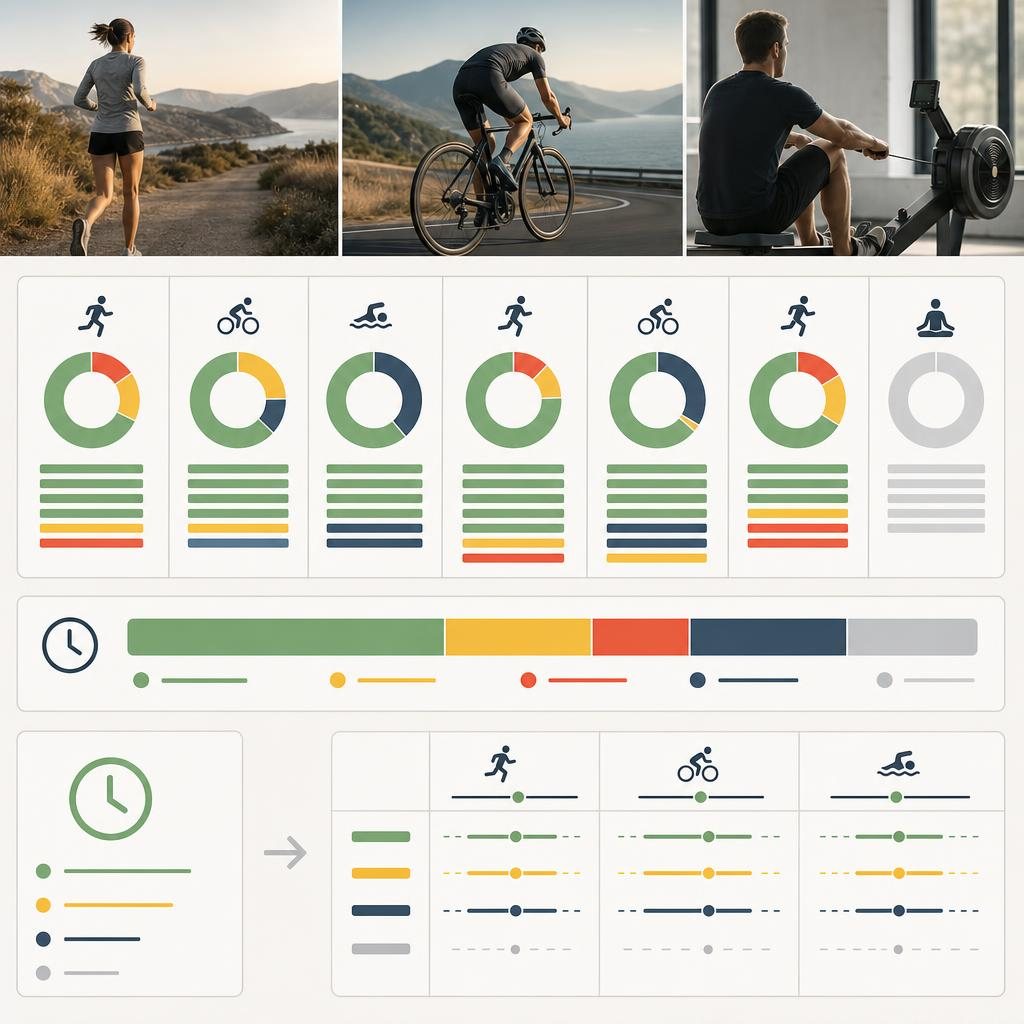
Most people do better spreading Zone 2 across the week instead of forcing all of it into one long session. A good default is 3 sessions per week. If you are building toward 150 minutes, that could be 3 x 50 minutes, 4 x 40 minutes, or 5 x 30 minutes. The exact split matters less than whether the sessions are repeatable.
For beginners, 2 to 3 sessions is enough. Start with 20 to 30 minutes and add time only when the current week feels controlled. For general health, 3 to 5 sessions works well because it spreads the recovery cost and makes consistency easier. For endurance athletes, Zone 2 may appear almost daily, but not every session needs to be long.
The CDC talk test is a simple way to check whether these sessions are actually moderate and controlled: during moderate-intensity activity, you can talk but not sing; during vigorous activity, speaking more than a few words becomes difficult (CDC). For Zone 2, you generally want the conversational side of that line. If the session turns into breathless tempo work, the weekly number may look right while the training stress is wrong.
Zone 2 mileage depends on Zone 2 pace. That sounds obvious, but it prevents a common mistake: copying someone else's mileage target without copying their speed, history, and recovery capacity.
Use this simple formula:
Zone 2 miles per week = Zone 2 minutes per week / Zone 2 pace in minutes per mile
Examples:
| Weekly Zone 2 time | Zone 2 pace | Weekly Zone 2 mileage |
|---|---|---|
| 120 min | 15:00/mi | 8 miles |
| 150 min | 12:00/mi | 12.5 miles |
| 180 min | 10:00/mi | 18 miles |
| 240 min | 8:00/mi | 30 miles |
This is why time is usually safer than mileage for Zone 2 planning. A faster runner can accumulate many more miles at the same aerobic cost. A newer runner may need run-walk intervals to stay in Zone 2, so a weekly mileage goal can push them too hard. Cyclists have the same issue with speed, wind, elevation, surface, and drafting. Distance is useful for logistics, but time at the right effort is the training target.
The "80/20" idea is useful, but it is often oversimplified. In endurance literature, low-intensity training usually means work below the first threshold in a three-zone model. In many watches, "Zone 2" means the second band in a five-zone model. Those are not always the same thing.
Seiler's review of endurance training practice notes that many successful endurance athletes perform about 80% of sessions or training time at low intensity, with the remainder dominated by harder work (PubMed). A broader review in Frontiers reports similar patterns, while also showing that distributions vary by sport, phase, and athlete level (Frontiers in Physiology).
For recreational athletes, translate that principle conservatively:
The more total training time you do, the more important easy intensity becomes. Hard workouts do not scale endlessly. Zone 2 lets you accumulate volume without making every session a recovery problem.
No. Zone 2 is useful because it is repeatable, not because it is magic.
A 2025 narrative review in Sports Medicine argued that current evidence does not support Zone 2 as uniquely optimal for improving mitochondrial or fat oxidative capacity in the general population, and it cautioned that higher intensities can be important when total training volume is low (PubMed). That does not make Zone 2 useless. It means the claim should be practical: Zone 2 is a sustainable way to build aerobic volume, but it should not crowd out every other training stimulus.
Long-term physical activity research also suggests that benefits continue beyond the minimum guideline range, but with diminishing returns and individual tradeoffs. A large prospective cohort study found that people doing 2 to 4 times the recommended minimum of moderate physical activity had somewhat lower mortality risk than those merely meeting the guideline, with the lowest risk around 300-600 minutes per week of moderate activity (PubMed). That is population-level evidence, not a command to double your training next week.
More Zone 2 is a good idea only when it improves the week. It is a bad idea when it steals sleep, aggravates injury, disrupts strength training, makes hard sessions flat, or turns easy days into hidden threshold work.
The safest progression is boring: add frequency first, then duration, then only later intensity.
If you currently do little aerobic work, start with 2 or 3 short sessions. When that feels normal, move toward 90-120 minutes per week. After that, build toward the 150 minute baseline if your health and schedule allow. Once you can repeat 150 minutes comfortably, decide whether your goal actually requires 200, 240, 300, or more.
For runners, avoid increasing Zone 2 time and high-intensity work at the same time. Tendons, bones, and connective tissue adapt more slowly than breathing fitness. If you add an extra easy run, keep workouts controlled. If you add intervals, keep Zone 2 volume stable for a week or two. If soreness accumulates, reduce volume before abandoning the plan.
For cyclists, rowers, and elliptical users, impact is lower, so you may tolerate more Zone 2 time sooner. But low impact is not no stress. Long rides still require fueling, hydration, position tolerance, and recovery.
For strength-focused athletes, Zone 2 should support lifting rather than interfere with it. Two or three 30-45 minute sessions can improve aerobic fitness without dominating the week. If lower-body lifting performance falls, move Zone 2 away from heavy leg days or reduce duration.
Zone 2 can be running, cycling, rowing, swimming, hiking, incline walking, elliptical, skiing, or any rhythmic aerobic activity that lets you hold the right effort. The activity matters less than the intensity and repeatability.
Good Zone 2 signs:
Bad Zone 2 signs:
Heart-rate zones can help, especially if your max and resting heart rate are reasonably set. But field feedback matters. Heat, caffeine, sleep, dehydration, altitude, and fatigue can all move heart rate. If your watch says Zone 2 but your breathing says tempo, believe your breathing.

Here are simple examples that show how the weekly number can change with goal and training age.
Do 3 sessions of 30 minutes. Keep them easy enough that you finish fresh. This is below the full guideline target, but it is a realistic first phase if you are building from low activity.
Do 5 sessions of 30 minutes, 3 sessions of 50 minutes, or 4 sessions around 40 minutes. If all of your aerobic work is moderate and conversational, this meets the common weekly baseline.
Do 3 to 5 Zone 2 sessions, with one longer session if your sport benefits from duration. For a runner, that might be 3 easy runs plus a low-impact bike ride. For a cyclist, it might be two short rides and one longer weekend ride.
Use this only if you have the history and recovery for it. Keep most of the added time easy. If intensity sessions degrade, soreness rises, or motivation drops, reduce volume before adding more.
A good weekly Zone 2 target depends on where you are starting and what you are training for. For general health, 150-300 minutes per week is the clearest evidence-based anchor. For beginners, less is acceptable while you build the habit. For endurance athletes, Zone 2 should usually make up most weekly endurance time, but the exact minutes depend on total volume and recovery.
Plan Zone 2 by time first. Convert to mileage only after you know your real conversational pace. Then let your body audit the plan: if you can repeat the week, recover well, and keep easy sessions truly easy, you are probably close to the right amount.

